Pitch: Find Your Reference Note
When someone says they cannot carry a tune while whistling, the issue is almost never a broken musical ear. Far more often, it is a tiny mismatch between the note imagined inside the head and the volume of the resonant cavity inside the mouth at the moment the air begins to move.
In acoustic terms, a human whistle behaves like a Helmholtz resonator. Your lips form the fixed aperture, while your tongue acts as a sliding piston that shrinks or enlarges the chamber behind the teeth. Once you decouple pitch changes from lip squeezing and hand the job over to the middle of your tongue, intonation becomes quiet, predictable, and repeatable.
How Tongue Arch Shapes Every Semitone
Try whispering the vowels "oo" (as in boot), "oh" (as in boat), "eh" (as in bet), and "ee" (as in beet) without changing the round opening of your lips. You will immediately feel the dorsum of your tongue rise toward the hard palate and move forward toward your upper incisors. That silent vowel ladder is the exact pitch engine used by classical siffleurs from Ronnie Ronalde and Roger Whittaker to contemporary international whistling competitors.
| Register Zone | Approximate Pitch Span | Internal Vowel Shape | Common Intonation Pitfall & Fix |
|---|---|---|---|
| Low Warm Register | C5 – F5 (523 – 698 Hz) | Deep "oo" to open "oh" with dropped jaw | Pitfall: Pitch goes flat when air slows. Fix: Keep the upper lip relaxed and lift the soft palate slightly. |
| Middle Speaking Zone | F#5 – D6 (740 – 1174 Hz) | Balanced "uh" to forward "eh" | Pitfall: Scooping into the start of the note. Fix: Set the tongue arch half a second before releasing air. |
| Upper Bell Register | Eb6 – C7 (1244 – 2093 Hz) | Bright "ih" to focused "ee" near alveolar ridge | Pitfall: Blowing harder, causing shrillness. Fix: Narrow the aperture slightly and use half the air volume. |
The Drone-and-Neighbour Experiment
Practising against a stationary drone is far gentler than staring at a flickering digital tuner needle. A visual needle tempts you to chase pitch with your eyes, whereas a warm acoustic drone teaches you to feel the acoustic stillness when two notes lock into tune.
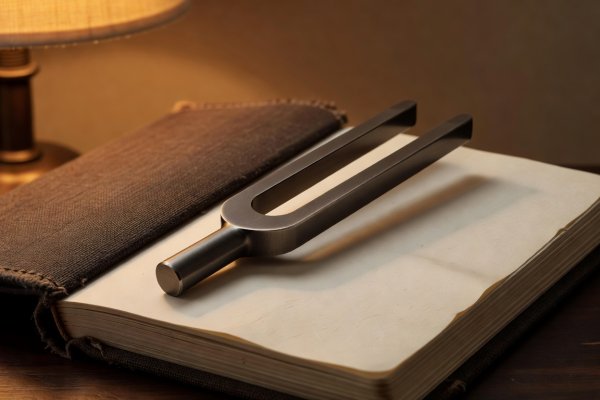
- Play a steady C5 or G4 note on a piano, harmonium app, or tuning fork.
- Close your eyes and hum the note softly first so your vocal folds confirm the pitch centre.
- Form your whistling embouchure, hold the silent vowel shape for that note, and enter on a calm breath for four counts.
- Slide up a whole step (major second), hold until the acoustic beats settle, and return to unison.
When you return to the reference tone, listen for whether you arrived slightly sharp—a common habit when descending from higher notes because the tongue lags behind the ear.
Four-Minute Daily Pitch Ladder
Simple pitch traces illustrate target interval steps for your inner ear without using microphone input.
Why Louder Air Pushes Your Pitch Sharp
One of the most helpful discoveries in any whistler's practice journal is the dynamic-pitch coupling effect. If you keep your tongue and lips completely still and suddenly double the speed of your breath, the whistled pitch will climb by twenty to forty cents—nearly half a semitone. Conversely, letting a long final note fade out without adjusting the tongue often makes the pitch sag flat right before silence.
To keep a sustained note steady during a crescendo or decrescendo, pair your breath with a microscopic counter-adjustment: as you swell the volume slightly, let the middle of the tongue relax downward by a fraction of a millimetre; as you taper a note into pianissimo, buoy the tongue tip slightly closer to the ridge behind your upper teeth. Try this on a single comfort note before applying it to a slow melody in our Breathing room or testing your ear in Catch the Tune Unwritten.